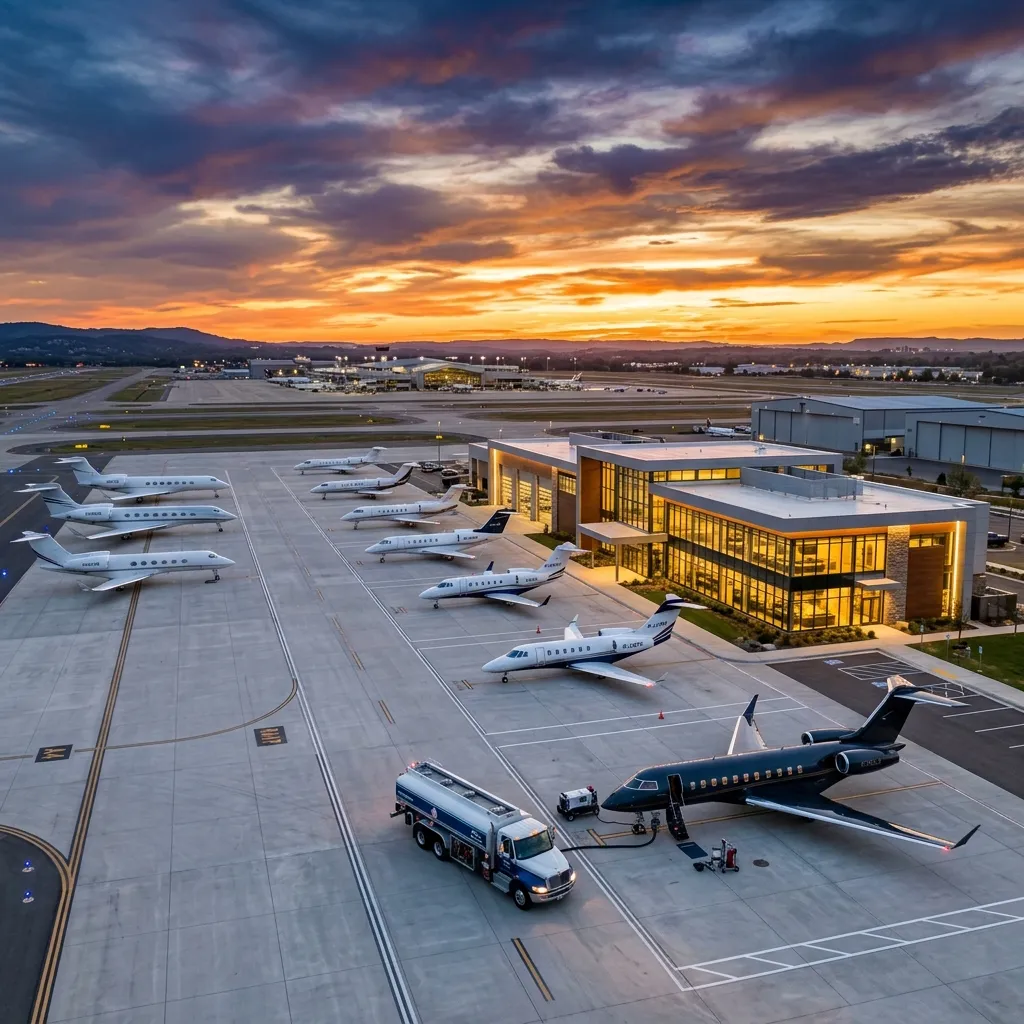
What Actually Separates a Great FBO from an Adequate One
There are approximately 3,000 fixed-base operators in the United States, and every private jet flight begins and ends at one of them. An FBO is the private terminal where your aircraft parks, refuels, and where you enter or exit the airport. The facility provides fuel, ground handling, crew services, customs clearance for international arrivals, hangar storage, and passenger amenities.
Most FBOs offer the same basic services. The differentiation happens in execution. A great FBO has a fuel truck at the aircraft before the engines spool down. The crew car is pre-positioned. The customs agent is already on site for an international arrival. Catering appears without a second call. These details do not show up in a facilities brochure.
Pilot surveys from the NBAA and AIN consistently identify the same factors that separate the top tier: fuel pricing transparency, ramp speed, crew lounge quality, hangar availability during weather events, and the willingness of line service to handle irregular operations without hesitation. The marble counters and espresso machines are marketing. The ramp execution is the product.
Pilots choose the FBO. Passengers rarely know the difference. But when ground handling goes wrong, everyone notices.
1. Signature Flight Support, Teterboro (KTEB)
Teterboro handles more business aviation movements than any airport in the New York metro area. Signature's TEB facility is the default arrival point for Wall Street, Midtown, and anyone who needs to be in Manhattan within 20 minutes of landing. The facility processes over 100 arrivals per day during peak periods.
What sets Signature TEB apart is volume management. The ramp team handles surge traffic during Davos season, UN General Assembly week, and the quarterly earnings travel cycle without visible strain. Customs is on-site for international arrivals. Ground transportation coordination includes pre-cleared helicopter transfers to Manhattan heliports for clients who cannot afford the 20-minute drive.
Fuel pricing at TEB is among the highest in the country, often $8.50 to $9.80 per gallon for Jet-A. Operators with volume contracts negotiate significantly lower rates. For a charter client, fuel cost is embedded in the hourly rate, but for owner-operators, the TEB fuel premium is a known line item.
2. Atlantic Aviation, Palm Beach International (KPBI)
Palm Beach International sees extreme seasonal demand from November through April, when the population of Palm Beach, Jupiter, and surrounding communities swells with owners of exactly the type of aircraft that need FBO service. Atlantic's PBI facility handles this surge with a level of preparation that reflects 20 years of muscle memory.
The facility features a 12,000-square-foot terminal, 80,000 square feet of heated hangar space, and a ramp that can accommodate aircraft up to the Boeing BBJ. Crew lounges include sleep rooms, which matter during peak season when repositioning schedules compress into narrow windows. Ground transportation to the island is coordinated with the same town car services that the residents already use.
3. Jet Aviation, Van Nuys (KVNY)
Van Nuys is the busiest general aviation airport in the world, handling approximately 200,000 operations per year. Jet Aviation's VNY facility occupies a premium position on the field with direct taxiway access that avoids the congestion points near the other FBOs on the south side.
The facility serves the entertainment industry, tech sector, and West Coast financial community. Discretion is not a marketing line here. It is an operational requirement. The terminal layout routes high-profile arrivals through private entrances that bypass the main lobby entirely. Hangar demand at VNY exceeds supply year-round, and Jet Aviation's waiting list for permanent hangar tenants is measured in years, not months.
Planning Your Next Departure?
We coordinate ground handling and FBO selection on every charter. Tell us your routing and we will place you at the right facility.
Request a Charter →4. Ross Aviation, Scottsdale (KSDL)
Scottsdale Airport operates under strict noise restrictions: no departures before 7:00 AM and a hard curfew at 10:30 PM. Every operator and FBO on the field works within these constraints. Ross Aviation (now part of Modern Aviation) has built its Scottsdale operation around precision timing. Ground handling is calibrated to get passengers off the ramp and into vehicles within 5 minutes of engine shutdown.
The Scottsdale market is seasonal but intense. Spring training, the Barrett-Jackson auction, the Waste Management Open, and the general winter migration from the Midwest and Northeast create demand spikes that rival Palm Beach. Ross handles it by pre-staging fuel trucks, pre-clearing customs for Mexico returns, and maintaining a fleet of courtesy SUVs that exceeds what airports twice its size offer.
5. Sheltair, Fort Lauderdale (KFLL)
Fort Lauderdale-Hollywood International is the preferred alternative to Miami for private aviation, and Sheltair's FLL facility is the reason. The campus includes over 200,000 square feet of hangar space, a full maintenance facility for airframe and engine work, and one of the largest ramp areas in South Florida.
Sheltair FLL processes a significant volume of international traffic from the Caribbean, Central America, and South America. Customs and Border Protection maintains a presence at the facility, which eliminates the delays that can occur at airports where CBP must be pre-arranged for each arrival. For operators running Caribbean charter schedules, this alone justifies the fuel cost differential over competing airports.
6 Through 10: Completing the List
The remaining five positions rotate depending on the survey year and evaluator, but the same facilities consistently appear: Million Air, Dallas Love Field (KDAL), with its newer terminal and competitive fuel pricing; Signature Flight Support, Chicago Midway (KMDW), which handles the corporate traffic that O'Hare's commercial congestion cannot accommodate; Atlantic Aviation, Aspen-Pitkin (KASE), the sole FBO at one of the most operationally demanding airports in the country.
Clay Lacy Aviation at John Wayne (KSNA) in Orange County provides a boutique experience that reflects its founder's 70-year aviation career. The facility combines FBO services with aircraft management and charter operations under one roof. And Meridian at Teterboro (KTEB) offers an alternative to Signature on the same field, with lower ramp fees and a facility that attracts operators tired of the Signature surcharge.
Henriksen Jet Center at Houston Hobby (KHOU) deserves mention for consistently outperforming expectations. The facility is smaller than the chain FBOs but regularly tops pilot surveys for line service quality and crew hospitality. In an industry dominated by three chains (Signature, Atlantic, Jet Aviation), independent operators like Henriksen prove that size is not a prerequisite for quality.
Note: Rankings shift annually based on pilot and passenger survey data from AIN, NBAA, and operator feedback. Use this as a starting framework, not a definitive list. Your crew will have their own preferences based on routing and operational needs.
How to Evaluate an FBO Before You Arrive
Ask your crew. Pilots fly into these facilities repeatedly and have strong, data-driven opinions about which FBOs execute well and which coast on reputation. A pilot who has landed at Signature TEB 40 times in the past year knows whether the fuel truck shows up in 3 minutes or 15.
Check AIN's FBO survey results, published annually. The survey aggregates thousands of pilot and passenger responses across categories including line service, facilities, customer service, and fuel pricing. Cross-reference with ForeFlight's FBO reviews, where pilots leave real-time feedback after each visit.
- Ask your pilot which FBO they prefer at each airport on your routing
- Check AIN FBO Survey rankings for the latest annual data
- Compare posted fuel prices on FuelBoss or AirNav before arrival
- Confirm customs availability for international arrivals at least 24 hours in advance
- Request hangar space early during peak season or weather events