Aircraft Registry
Part 135 · Charter Available
Operated by Craft Charter, LLC

N251FT

Bombardier Challenger 300 · Super Midsize


470
Knots Cruise
3,100
NM Range
9
Passengers
2
Engines

Tracking via ADS-B telemetry. Map active when aircraft is airborne.

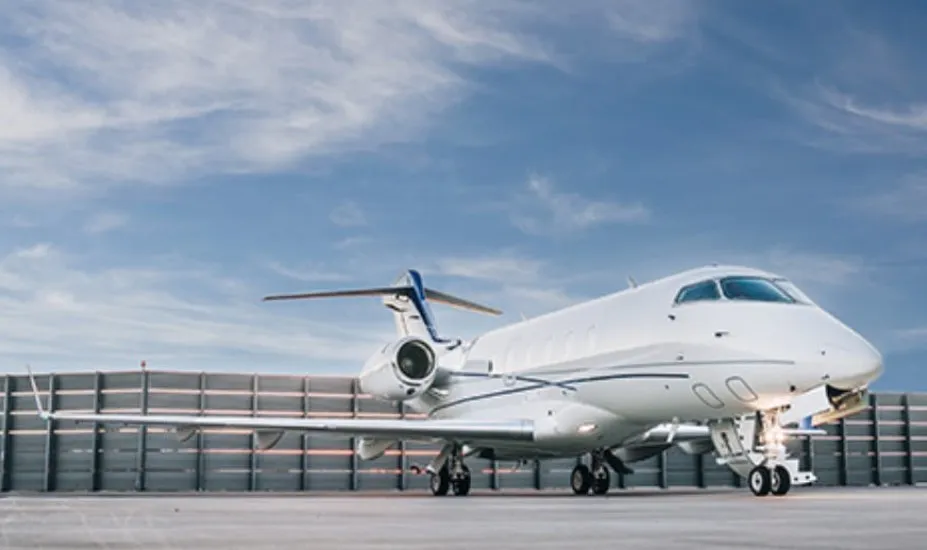
N251FT Bombardier Challenger 300 Super Midsize
Bombardier Challenger 300 — Bombardier

N251FT Aircraft Overview

Performance Profile

N251FT's Bombardier Challenger 300 cruises at 470 knots with 3,100 nautical miles of range under NBAA IFR reserves. The 2x Honeywell HTF7000 produce 6,826 lbs per side, supporting operations up to 45,000 feet.

Mission Profile

The Bombardier Challenger 300 seats up to 10 passengers in a 25.2 ft by 7.2 ft by 6.1 ft cabin. N251FT offers the stand-up headroom and flat-floor configurations that distinguish super-midsize from traditional midsize jets.

Charter Authorization

Charter authorization is active for N251FT. This Bombardier Challenger 300 operates under a Part 135 certificate for domestic and select international missions. Contact The Jet Finder to check scheduling and positioning.

Insider Note

The Bombardier Challenger 300's flat-floor cabin is a feature that does not show up in spec sheets but changes the passenger experience. N251FT's 6.1 ft-tall cabin means full standing headroom for most passengers, which matters on flights exceeding three hours.

Charter & Acquisition Briefing

N251FT, a 2011 Challenger 350 under , sits in the fastest-growing segment of business aviation. Below is the operational and market context for this specific aircraft.

Fleet Position

Over 800 Challenger 300/350/3500 aircraft are in service globally, with approximately 350 on U.S. registrations. FAA data shows N251FT based in 10 passengers, . The Challenger 350 is the most-chartered super-midsize jet in North America. Fleet density ensures availability in every major market, and the 350's popularity means crew pools are deep and positioning costs are competitive.

Charter Availability

N251FT is Part 135 charter authorized. Challenger 350 charter rates range from $5,000 to $7,000 per flight hour. The 350 sits at the price-performance sweet spot: enough cabin for 8 to 10 passengers, 3,200 nm range for coast-to-coast nonstop, and Mach 0.83 cruise that matches large-cabin jets at 30% lower hourly rates. Positioning from 10 passengers adds $3,000 to $6,000.

Market Position

N251FT is a 2011 Challenger 350, the upgraded variant Bombardier introduced in 2014 with HTF7350 engines, improved range, canted winglets, and the enhanced Collins Pro Line 21 avionics. Pre-owned values sit at $11M to $16M. Early 350s are in peak demand: modern capability with significant depreciation from the $27M list price.

The early 350 represents the sweet spot for super-mid acquisition. Enough depreciation to save $10M+ versus new, but modern enough that avionics, cabin, and engines are fully current-generation. Budget $650,000 to $850,000 annually for total operating costs at 400 hours including crew, hangar, insurance, and maintenance reserves.

Mission Profile

The Challenger 350 is the default super-mid for a reason: it does everything well. Mach 0.83 cruise matches large jets. 3,200 nm range covers coast-to-coast. 6.1-foot-wide cabin seats 10 with a flat floor. Full galley allows catered service on 4+ hour flights. The aircraft has no critical weakness, which is why it outsells every super-mid competitor by volume.

When to Choose Something Else

The Challenger 350 is overkill for domestic routes under 1,500 nm with 4 or fewer passengers. A Phenom 300 or Citation XLS handles those missions at $2,000 to $3,000 less per flight hour. The super-mid cabin is wasted on short legs with small groups. Match the aircraft to the mission.

Ownership & Operations

Operating costs for business jets break into fixed and variable categories. Fixed costs (hangar, insurance, crew salaries, management fees) accrue whether the aircraft flies or not. Variable costs (fuel, maintenance reserves, landing fees, handling) scale with flight hours. Owners flying fewer than 200 hours annually often find charter or fractional ownership more economical than whole aircraft ownership.

Pre-Purchase Considerations

Total time on airframe and engines is the primary metric for aircraft valuation. Lower-time aircraft command premium pricing but cost more upfront. Higher-time aircraft offer lower acquisition cost but carry higher near-term maintenance exposure. The break-even analysis depends on planned utilization: buyers flying 400+ hours annually amortize acquisition cost faster and tolerate higher initial investment.

Charter Market Context

Jet card programs and membership plans lock in hourly rates for guaranteed availability. Cards typically require a $50,000 to $500,000 deposit and offer 24 to 48 hour booking windows with fixed hourly pricing. The value depends on usage frequency: clients flying 25+ hours annually benefit from rate certainty and guaranteed availability. Below 25 hours, on-demand charter often provides better economics.

N251FT Aircraft Intelligence

Cross-referenced from FAA Registry, Part 135 operator database, and live ADS-B telemetry.

🏛
Ownership Class
LLC
FAA Registration Entity Type
📍
Base Airport (Est.)
KBOS - Boston Logan International Airport
Boston, MA
FAA Airworthiness
Oct 4, 2022
Continuously airworthy for 3 years
Part 135 Certified
Craft Charter, LLC
Legally authorized for on-demand charter
Registration
Active
Expires Dec 31, 2030
Last FAA Action
Dec 28, 2023
Most recent registry update
NTSB Record
Clean
No accidents or incidents on file
N251FT Bombardier Challenger 300 available for charter or acquisition

Inquire About N251FT

Contact us to see if this aircraft is available for a charter flight or acquisition that fits your needs. If the aircraft is not available or does not work for you, we operate private aircraft as well and have access to more than 15,000 private aircraft worldwide.

For more information contact us and one of our private aviation advisers will be happy to assist you.

Contact Us

Detailed Specifications

Aircraft Identity

RegistrationN251FT
ManufacturerBombardier
ModelBombardier Challenger 300 (Challenger 300)
Part 135 OperatorCraft Charter, LLC
CategorySuper Midsize
Cabin Class
Year Built2011
Configuration9
Home AirportKTEB
Interior Refurbished10/9/2022

Performance & Capabilities

Engine Type2x Honeywell HTF7000
Engine Thrust6,826 lbs
Max Cruise Speed470 knots
Maximum Range3100 nautical miles
Service Ceiling45000 feet
Takeoff Distance4,810 ft
Passenger Capacity10 passengers
Baggage Volume106 cu ft
AvionicsRockwell Collins Pro Line 21
IFR CertifiedYes

Frequently Asked Questions About N251FT

16 questions answered about this aircraft and the Bombardier Challenger 300

N251FT is a 2011 Bombardier Challenger 300 (Challenger 300) registered in the United States. It carries serial number on file with the FAA and is classified as a super midsize jet in the private aviation market. The aircraft has maintained continuous airworthiness for 3 years.

N251FT is a Bombardier Challenger 300 (Challenger 300). The Bombardier Challenger 300 is a super midsize jet platform with a range of 3,100 nautical miles. Bombardier has a well-established support network for this airframe.

The Bombardier Challenger 300 is powered by 2x Honeywell HTF7000, each producing 6,826 lbs. Engine maintenance programs from the manufacturer spread overhaul costs across flight hours, making operating expenses predictable. The powerplant supports a service ceiling of 45,000 feet.

The Bombardier Challenger 300 has a maximum cruise speed of 470 knots. Long-range cruise is 430 kts. At these speeds, a three-hour flight covers approximately 1410 nautical miles, connecting most major city pairs within its range envelope.

The Bombardier Challenger 300 (Challenger 300) has an approximate range of 3,100 nautical miles. This translates to nonstop coverage of transatlantic routes including New York to London, or Los Angeles to Honolulu. At a cruise speed of approximately 470 knots, total block times remain competitive for the category.

The Bombardier Challenger 300 seats up to 10 passengers in a typical charter configuration. The cabin measures 25.2 ft long, 7.2 ft wide, and 6.1 ft tall. The cabin accommodates productive work or rest on flights of typical duration.

The Bombardier Challenger 300 has a maximum service ceiling of 45,000 feet (FL450). At this altitude, the aircraft operates above commercial traffic and most weather systems. The pressurization system maintains a cabin altitude of approximately 5,500-6,500 feet at maximum cruise altitude, reducing passenger fatigue on long flights.

Yes. The Bombardier Challenger 300 is fully certified for IFR (Instrument Flight Rules) operations. It is equipped with Rockwell Collins Pro Line 21 avionics avionics, supporting precision approaches, RNAV/GPS navigation, FANS/CPDLC for oceanic operations, and ADS-B Out compliance. All Part 135 charter operations require two instrument-rated pilots.

The Bombardier Challenger 300 cabin measures 25.2 ft long, 7.2 ft wide, and 6.1 ft tall. The flat-floor, stand-up cabin allows passengers to move freely without stooping. Baggage capacity is 106 cu ft.

The Bombardier Challenger 300 has 106 cu ft of baggage volume in an externally accessible, heated and pressurized compartment. This accommodates 10+ full-size suitcases or a combination of luggage, garment bags, and sporting equipment. The compartment does not intrude on cabin space.

The Bombardier Challenger 300 is equipped with Rockwell Collins Pro Line 21 avionics. This integrated flight deck provides enhanced situational awareness, synthetic vision, TCAS II, and weather radar. The system supports single-crew operations where type-certified, though Part 135 charter flights require two pilots.

The Bombardier Challenger 300 was produced in various production years. This aircraft (N251FT) was manufactured in 2011.

The Bombardier Challenger 300 competes in the Super Mid Jet segment against aircraft with similar range and cabin specifications. Key differentiators include a cruise speed of 470 knots, range of 3,100 nm, and a 7.2 ft-foot-wide cabin. Selection between competing types depends on mission profile, operator availability, and total trip cost.

Charter rates for the Bombardier Challenger 300 typically range from $3,500-$5,000 per flight hour, depending on operator, region, and seasonal demand. This includes crew, fuel at current Jet-A prices, and standard handling. Additional costs may include FBO fees, overnight crew expenses, international handling, and repositioning if the aircraft is not based at the departure airport.

Yes. N251FT holds an active Part 135 certificate under Craft Charter, LLC, meaning it is legally authorized for on-demand charter operations. Contact The Jet Finder to check current availability and schedule a flight.

Contact us for acquisition information about N251FT. Our aviation advisors can provide market valuation and availability details.

Inquire About N251FT

From Your First Mission to Your Final Acquisition


Contact us to see if this aircraft is available for a charter flight or acquisition. If this aircraft is not available, we operate private aircraft and have access to more than 15,000 private aircraft worldwide.