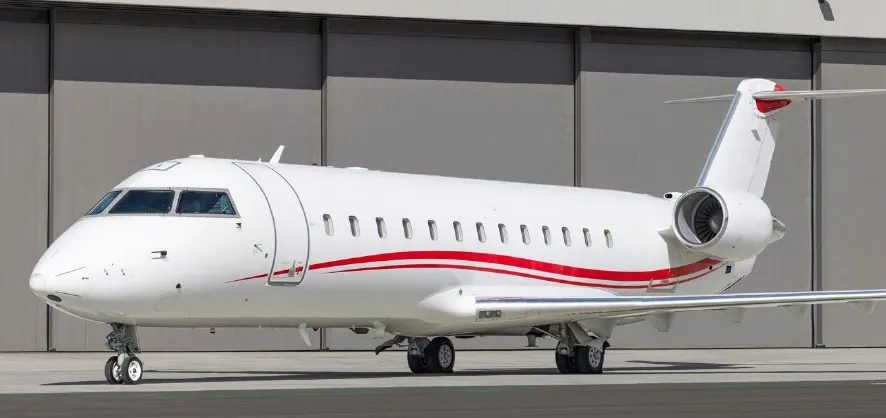
N530JW Aircraft Overview
Performance Profile
At 459 knots and 2,600 NM, the Bombardier Challenger 850 sits in the sweet spot for operators who need transcontinental reach without the acquisition cost of an ultra-long-range platform. N530JW's 2x GE CF34-3B1 deliver 9,220 lbs per side with a service ceiling of 41,000 feet.
Mission Profile
For operators flying 4-6 hour missions with 8-12 passengers, the Bombardier Challenger 850 delivers the right balance. N530JW seats up to 15 in a 48.4 ft cabin with 8.2 ft width. Stand-up headroom at 6.1 ft means passengers move freely between zones.
Charter Authorization
This Bombardier Challenger 850 is Part 135 certified for charter operations. N530JW is available through its certificated operator for missions requiring heavy-jet cabin space and transcontinental range. Contact us for a quote.
Insider Note
The Bombardier Challenger 850 fleet includes a wide range of configurations and avionics suites across production years. N530JW's 2011 vintage places it in a specific generation of the platform. Buyers comparing airframes should focus on avionics upgrade status, interior refurbishment date, and engine program enrollment rather than total airframe hours alone.
Charter & Acquisition Briefing
N530JW is a 2011 aircraft registered to . This airframe represents the broad spectrum of business and special-mission aviation. Here is the operational context.
Fleet Position
FAA data shows N530JW based in 15 passengers, . This aircraft is part of the diverse U.S. business aviation fleet that spans from vintage Gulfstreams and Sabreliners to modern large-cabin jets and regional turboprops. The depth of the U.S. aviation maintenance infrastructure ensures parts and service support for virtually every type.
Charter Availability
N530JW is Part 135 charter authorized. Charter rates vary widely by aircraft type, from $2,000 per hour for light aircraft to $15,000+ per hour for large-cabin jets. Contact The Jet Finder for current availability and pricing on this specific aircraft.
Market Position
A 2011 production date places N530JW in the modern generation with glass cockpit avionics, improved engines, and refined cabin designs. Pre-owned values sit at $10M to $40M. Modern business aircraft combine current-generation capability with meaningful depreciation from original delivery prices.
Pre-owned modern aircraft offer 90% of new-production capability at 50 to 70% of new-production cost. For operators whose mission does not require the absolute latest avionics revision, modern pre-owned aircraft represent the strongest value in business aviation.
Mission Profile
Core strength: flexibility. Business aircraft depart when you are ready, from airports near your origin and destination. They carry your team, your schedule, and your security requirements. The value is not in the aircraft itself; it is in the time recovered and the control gained.
When to Choose Something Else
Evaluate helicopter charter for routes under 150 miles where time on the ground matters more than time in the air. Helicopters eliminate the need for airport proximity and provide direct-to-destination service in urban areas.
Ownership & Operations
Part 91 operations cover owner-flown and company-flown aircraft under general operating rules. Part 135 governs on-demand air charter, requiring higher crew qualifications, maintenance standards, and operational oversight. An aircraft can operate under both parts: Part 91 for owner use and Part 135 when offered for charter revenue. Dual-use arrangements offset ownership costs by generating charter income during idle periods.
Pre-Purchase Considerations
Pre-purchase inspections are non-negotiable in aircraft acquisitions. A qualified maintenance facility conducts a detailed review of airframe, engines, avionics, and records. Inspection costs range from $15,000 to $75,000 depending on aircraft size and complexity. Findings from the pre-buy determine final pricing, identify upcoming maintenance events, and reveal any damage history that affects value.
Charter Market Context
Charter demand for business jets follows seasonal and economic patterns. Q4 (October through December) sees peak demand driven by year-end business travel, holiday flights, and tax planning (asset purchases before December 31). Q1 starts strong with CES, Davos, and Super Bowl driving specific route demand. Summer leisure travel to resort destinations creates predictable seasonal corridors.
N530JW Aircraft Intelligence
Cross-referenced from FAA Registry, Part 135 operator database, and live ADS-B telemetry.
Inquire About N530JW
Contact us to see if this aircraft is available for a charter flight or acquisition that fits your needs. If the aircraft is not available or does not work for you, we operate private aircraft as well and have access to more than 15,000 private aircraft worldwide.
For more information contact us and one of our private aviation advisers will be happy to assist you.
Contact UsDetailed Specifications
Aircraft Identity
| Registration | N530JW |
|---|---|
| Manufacturer | Bombardier |
| Model | Bombardier Challenger 850 (Challenger 850) |
| Part 135 Operator | Great Western Air LLC |
| Category | Private Jet |
| Cabin Class | — |
| Year Built | 2011 |
| Configuration | 15 |
| Home Airport | KOPF |
| Interior Refurbished | 1/1/2014 |
| Exterior Refurbished | 1/1/2014 |
Performance & Capabilities
| Engine Type | 2x GE CF34-3B1 |
|---|---|
| Engine Thrust | 9,220 lbs |
| Max Cruise Speed | 459 knots |
| Maximum Range | 2600 nautical miles |
| Service Ceiling | 41,000 feet |
| Passenger Capacity | 15 passengers |
| Avionics | Rockwell Collins Pro Line 21 |
| IFR Certified | Yes |
Frequently Asked Questions About N530JW
16 questions answered about this aircraft and the Bombardier Challenger 850
N530JW is a 2011 Bombardier Challenger 850 (Challenger 850) registered in the United States. It carries serial number on file with the FAA and is classified as a heavy jet in the private aviation market. The aircraft has maintained continuous airworthiness for 5 years.
N530JW is a Bombardier Challenger 850 (Challenger 850). The Bombardier Challenger 850 is a heavy jet platform with a range of 2,600 nautical miles. Bombardier has a well-established support network for this airframe.
The Bombardier Challenger 850 is powered by 2x GE CF34-3B1, each producing 9,220 lbs. Engine maintenance programs from the manufacturer spread overhaul costs across flight hours, making operating expenses predictable. The powerplant supports a service ceiling of 41,000 feet.
The Bombardier Challenger 850 has a maximum cruise speed of 459 knots. Long-range cruise is 424 kts. At these speeds, a three-hour flight covers approximately 1377 nautical miles, connecting most major city pairs within its range envelope.
The Bombardier Challenger 850 (Challenger 850) has an approximate range of 2,600 nautical miles. This translates to nonstop coverage of transatlantic routes including New York to London, or Los Angeles to Honolulu. At a cruise speed of approximately 459 knots, total block times remain competitive for the category.
The Bombardier Challenger 850 seats up to 15 passengers in a typical charter configuration. The cabin measures 48.4 ft long, 8.2 ft wide, and 6.1 ft tall. Standard configurations include forward club seating, a mid-cabin conference group, and an aft divan.
The Bombardier Challenger 850 has a maximum service ceiling of 41,000 feet (FL410). At this altitude, the aircraft operates above commercial traffic and most weather systems. The pressurization system maintains a cabin altitude of approximately 5,500-6,500 feet at maximum cruise altitude, reducing passenger fatigue on long flights.
Yes. The Bombardier Challenger 850 is fully certified for IFR (Instrument Flight Rules) operations. It is equipped with Rockwell Collins Pro Line 21 avionics avionics, supporting precision approaches, RNAV/GPS navigation, FANS/CPDLC for oceanic operations, and ADS-B Out compliance. All Part 135 charter operations require two instrument-rated pilots.
The Bombardier Challenger 850 cabin measures 48.4 ft long, 8.2 ft wide, and 6.1 ft tall. The flat-floor, stand-up cabin allows passengers to move freely without stooping. Baggage capacity is 200 cu ft.
The Bombardier Challenger 850 has 200 cu ft of baggage volume in an externally accessible, heated and pressurized compartment. This accommodates 12+ full-size suitcases or a combination of luggage, garment bags, and sporting equipment. The compartment does not intrude on cabin space.
The Bombardier Challenger 850 is equipped with Rockwell Collins Pro Line 21 avionics. This integrated flight deck provides enhanced situational awareness, synthetic vision, TCAS II, and weather radar. The system supports single-crew operations where type-certified, though Part 135 charter flights require two pilots.
The Bombardier Challenger 850 was produced in various production years. This aircraft (N530JW) was manufactured in 2011.
The Bombardier Challenger 850 competes in the Heavy Jet segment against aircraft with similar range and cabin specifications. Key differentiators include a cruise speed of 459 knots, range of 2,600 nm, and a 8.2 ft-foot-wide cabin. Selection between competing types depends on mission profile, operator availability, and total trip cost.
Charter rates for the Bombardier Challenger 850 typically range from $4,000-$5,800 per flight hour, depending on operator, region, and seasonal demand. This includes crew, fuel at current Jet-A prices, and standard handling. Additional costs may include FBO fees, overnight crew expenses, international handling, and repositioning if the aircraft is not based at the departure airport.
Yes. N530JW holds an active Part 135 certificate under Great Western Air LLC, meaning it is legally authorized for on-demand charter operations. Contact The Jet Finder to check current availability and schedule a flight.
Contact us for acquisition information about N530JW. Our aviation advisors can provide market valuation and availability details.
From Your First Mission to Your Final Acquisition
Contact us to see if this aircraft is available for a charter flight or acquisition. If this aircraft is not available, we operate private aircraft and have access to more than 15,000 private aircraft worldwide.